

In every significant wealth journey, there comes a moment when the focus moves beyond investment choices to the way wealth is structured, governed and preserved over time. Complexity is then a given; what truly matters is the ability to maintain direction and coherence.
For families and entrepreneurs managing lives, businesses and assets across borders, this coherence must endure across generations, jurisdictions and long-term objectives. It is at this level that the role of a private bank evolves, from execution to stewardship.
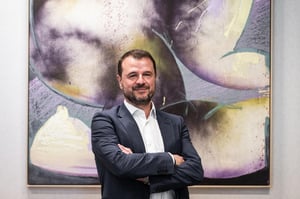
In this interview, Emanuele Vignoli, Market Head of Continental Europe for HSBC Private Bank, CEO of HSBC Luxembourg and CEO of HSBC Private Bank (Luxembourg) S.A., shares his vision of wealth governance as a long-term partnership grounded in clarity, continuity and trust, and reflects on the responsibilities of leading an international private bank in an increasingly complex world.
As wealth structures and regulatory frameworks become increasingly complex, how does HSBC Luxembourg help clients establish clear, coherent and sustainable wealth governance?
Wealth complexity today is no longer defined solely by the size of assets. It increasingly reflects a combination of international family structures, entrepreneurial activity, diversified asset classes, and evolving regulatory requirements. For many clients, personal and business interests are closely linked, often across several jurisdictions and generations.
In this context, HSBC Luxembourg plays a structuring role, helping clients bring clarity to their wealth governance. HSBC Private Bank sits at the heart of this approach, particularly when it comes to managing sophisticated, cross-border wealth situations. The objective is not to impose rigid structures, but to help families and entrepreneurs define clear decision-making frameworks that can evolve over time.
This starts with a deep understanding of the client’s long-term objectives whether related to wealth preservation, business continuity, succession, diversification or family alignment. From there, HSBC supports the design of governance frameworks that clarify roles, responsibilities and decision processes, while remaining adaptable to regulatory or family changes.
Luxembourg’s position as an international financial centre is a natural advantage in this respect. Combined with the global reach of HSBC, it enables clients to benefit from local expertise while navigating international complexity in a coherent and sustainable way.
You advocate a multi-expertise approach combining private banking, wealth structuring and international solutions. Why has this model become essential for long-term wealth decisions?
Long-term wealth decisions can no longer be addressed through a single lens. Investment strategy, structuring, financing, private assets and entrepreneurial considerations are increasingly interconnected. Addressing them separately often creates fragmentation and additional complexity for clients.
This is why HSBC’s multi-expertise model has become essential. HSBC Private Bank acts as the trusted partner for wealth management and sophisticated advisory, while the broader capabilities of the HSBC Group complement this role.
This combination allows HSBC to look at wealth in a holistic manner, connecting personal and professional dimensions. It also enables a cross-activity and cross-market approach, particularly across Europe.
The benefit for clients is clarity. Instead of navigating multiple disconnected advisors, they can rely on a coordinated framework where expertise is mobilised when relevant, always aligned with their long-term objectives.
In an environment where families work with many independent advisors, how does HSBC Luxembourg position itself as a point of balance and coherence while fully respecting advisor independence?
High-net-worth families and entrepreneurs are surrounded by a wide ecosystem of independent advisors, lawyers, tax specialists, family officers and other professionals. This diversity of expertise is valuable, but it can also lead to complexity if not properly coordinated.
HSBC Luxembourg does not seek to replace these advisors. The bank positions itself as a partner of coherence, working alongside them while fully respecting their independence. The role of HSBC is to help ensure alignment between the different strands of advice and to maintain a clear, global view of the client’s situation. With our technology, tools and Aladdin Wealth offer, we can propose a financial health check with an aggregated view of accounts held by a family with different institutions and then allowing to focus on strategic asset allocation choices.
This requires strong listening skills, transparency and long-term relationships. By understanding both the personal and entrepreneurial dimensions of a client’s wealth, HSBC can help anticipate interactions between decisions for example between structuring, financing and investment choices.
When supporting wealth across market cycles and generations, which principles should remain unchanged, even as markets, regulations and models evolve?
Markets and regulations will continue to evolve, sometimes rapidly. Business models will change, and new asset classes will emerge. Yet when wealth is managed across generations, certain principles must remain constant.
The first is alignment with the client’s long-term interests. Short-term market movements should never override clearly defined objectives related to wealth preservation, succession or family stability. The second is discipline in governance, risk management and decision-making, particularly during periods of uncertainty.
A third key principle is long-term perspective. Supporting families and entrepreneurs over generations requires patience and consistency, as well as an understanding that some decisions will only reveal their full impact over time. Finally, trust and relationship quality are fundamental. Without them, it is difficult to navigate moments of transition or uncertainty with confidence. These principles provide a stable foundation, allowing solutions to evolve while preserving overall coherence.
In a rapidly changing world, how do you define today the responsibility of a CEO in an international bank?
The responsibility of a CEO today goes beyond strategy or governance alone. It is about bringing people together around a clear sense of direction, while remaining close to clients and teams in an environment marked by uncertainty and change.
Setting a clear vision is essential, but that vision must be practical and grounded. It needs to translate into everyday decisions, strong governance and a culture of responsibility.
At the same time, a CEO has a responsibility to support clients through periods of uncertainty. This means offering clarity when markets are volatile, helping clients make informed decisions, and remaining focused on long-term outcomes rather than short-term reactions.
Taking on the role of Market Head of HSBC Private Bank Continental Europe and CEO of HSBC Luxembourg, also comes with a strong collective dimension. It is about fostering collaboration across businesses and markets, particularly in Europe, and ensuring that teams feel empowered and aligned around a shared purpose.
Ultimately, the role is about creating the conditions for long-term trust for clients, for employees and for the broader financial ecosystem. In a world that continues to change, that trust remains the most valuable asset a bank can build.