

As financial institutions face growing regulatory pressure and increasingly complex operations, many banks are reaching the limits of their legacy core banking systems.
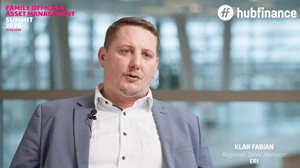
At FOAM, Fabian Klar, Regional Sales Manager at ERI Bancaire, shared insights on how banks are rethinking their technological foundations to build more integrated and data-driven infrastructures.
Successful transformation, he explained, starts with clear planning. Defining the project scope, requirements, timing and budget is essential before selecting a vendor. Equally important is approaching the selection process without bias to ensure the chosen system truly fits the institution’s needs.
Once a solution is selected, strong project governance becomes critical. Dedicated project management, clear milestones and rigorous testing help ensure a smooth and secure implementation.
Many banks still operate with legacy systems surrounded by multiple additional tools, creating fragmented ecosystems where data is dispersed across platforms. Modern core banking systems aim to solve this challenge by centralising information within a unified architecture.
ERI Bancaire’s platform, for example, enables integration with specialised systems via APIs while maintaining a single source of truth for client, product and operational data.
In this context, core banking transformation is no longer simply a technology upgrade, it is a strategic shift toward data integrity, integration and long-term scalability for financial institutions.