
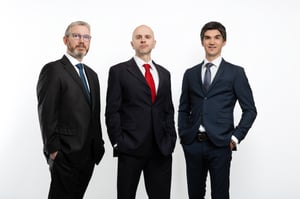
Fund accounting, NAV calculation and reporting have traditionally been viewed as back-office functions. However, in an environment of increasingly complex portfolios and faster decision cycles, these “invisible” functions are becoming increasingly strategic. In this exclusive interview, the partners at Orientis, a firm built on pragmatism and technical expertise, discuss how fund administration is evolving into a key component of the investment infrastructure
Orientis operates in key but often invisible functions such as fund accounting, NAV calculation, and reporting. Why are these “invisible” functions now strategic?
Fund accounting, NAV calculation and reporting have traditionally been seen as back-office functions. However, based on our experience, we consider them to be central to decision-making.
The effectiveness of investment decisions depends crucially on the quality, consistency and timeliness of underlying data. If the latter is incomplete, delayed or not fully reconciled, the risks faced by CIOs shift from operational to strategic.
In addition to supporting CIOs in investment decisions, these functions also play an essential role in delivering reliable and coherent information to investors and ultimate beneficiaries. This is particularly important in a family office context, where financial expertise may vary widely across family members.
In today’s environment, with increasingly complex portfolios and faster decision cycles, back-office functions are no longer just about producing numbers – they form fully integrated, high-value information chains.
In our view, fund administration is no longer a support function, it is an integral part of the investment infrastructure. We are fully aware of the responsibility this implies within our clients’ investment process.
Where are the main difficulties today?
The main challenge we observe today is the lack of flexibility in the services and tools typically made available to front-office teams. It is understandable that fund administrators seek to standardise their infrastructure across clients in order to achieve scale and efficiency. However, this should not come at the expense of the client’s specific information needs, which are by nature unique.
Our approach is to provide clients with solutions that offer a high degree of customisation at the interface level, while relying on robust and standardised technology in the background.
In practice, we see nowadays a lot of web-based platforms where users must rely on the provider to input, validate or customise their data. This can become time-consuming and frustrating, and ultimately creates the impression that clients are “borrowing their own data” rather than having full control over it. While such tools can be valuable for front-office analysis, we believe that clients should always retain direct access to the underlying data backbone — which is what we provide through our accounting systems.
Another widespread challenge is fragmentation. Investment teams increasingly operate across multiple banks, jurisdictions, asset classes and structures. Private markets, derivatives and layered vehicles add further complexity, leading to inconsistent valuations, timing differences, incomplete data flows and, ultimately, the absence of a single, reliable source of truth.
A core part of our role is therefore to integrate and harmonise data on behalf of our clients, bringing together information from different proprietary systems. The key issue is not only technological — it is also organisational. Standard models and tools often struggle to adapt to non-standard setups, leaving gaps in data consolidation and reporting.
In simple terms, we aim to move from “aggregation” to “true synergy”.
With more than fifteen years of experience in fund administration and servicing wealth structures, what major shifts have you observed in the expectations of investors and family offices over time?
Over the past fifteen years, the expectations within the fund industry have evolved significantly.
Investment managers now expect timely, transparent and fully reconciled information, delivered through reports or snapshots as close to real time as possible. They are no longer satisfied with basic bookkeeping and audited financial statements. Increasingly, they focus on performance reporting including TWR, IRR, performance ratios and private equity carried interest and some have even started delegating to fund administrators analyses that were traditionally performed by front-office teams, such as performance attribution or benchmarking.
From an operational perspective, we have also observed a growing focus on objectives that may appear difficult to reconcile at first sight. On the one hand, robustness: data integrity, process reliability and auditability have become key priorities, particularly in the context of making complex structures more transparent. On the other hand, flexibility: the need to move beyond standardised service models, which often struggle to accommodate non-standard portfolios.
We find that the ability to reconcile these two dimensions, robustness and flexibility, has become a critical factor of success in the fund administration industry.
Could you walk us through your background and the creation of Orientis? What led you to build this entrepreneurial project around three co-founders?
Orientis combines the agility of a young firm with the experience gained over many years supporting the wealth structures of one of Europe’s most prominent families.
The three partners have worked closely together for over fifteen years. Our backgrounds in fund administration and audit within global institutions provided us with a strong technical foundation, but also led us to a shared conviction that “things can be done differently”.
We place a strong emphasis on pragmatism, flexibility and technical expertise as core values. Each solution that we design is driven by our clients’ specific needs and grounded in a deep understanding of data flows, technological and regulatory constraints, and the need for coherence within existing operating frameworks.
Orientis was built around the idea of offering full fund administration services to investment managers who value speed, customisation and direct access to decision-makers, with a particular focus on situations where complexity creates significant operational challenges.
Orientis is now joining the Hubfinance ecosystem. What are your growth ambitions, and what do you aim to bring to this community?
A platform like Hubfinance is the place to be for a young firm like ours, which aims to modernise a traditionally structured industry. As we promote a tailored approach to fund administration, it comes natural for us to engage with a premium ecosystem that fosters networking, discussion and benchmarking with like-minded companies.
Our ambition is to contribute a strong operational perspective within this community, particularly on topics that are often less visible but critical: data integrity, reporting frameworks and robust operating models.
We believe that many investors face similar challenges when it comes to structuring and controlling complex portfolios. By sharing practical insights and real-life experience, we aim at properly addressing such issues. We will rely on Hubfinance to engage with these investors, understand their evolving needs and continuously refine our approach.
Ultimately, our goal is to be recognised as a reliable partner for investment managers, AIFMs and family offices – a partner capable of combining robust fund administration with the flexibility required to address complex or non-standard situations.